
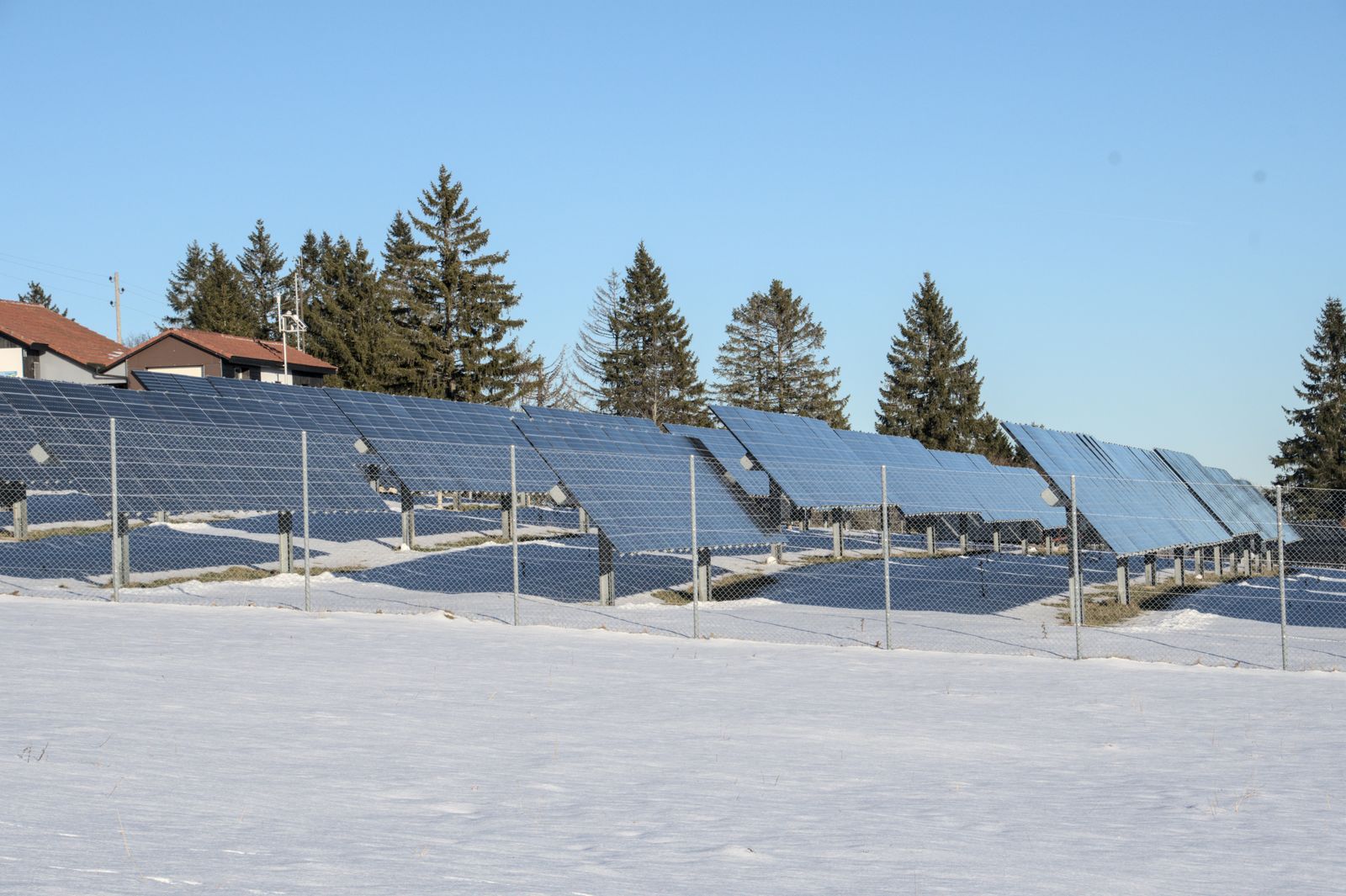
Solar Panels in Winter: Keep Your DC SREC Income Safe
By Team Faseeh Lall
Winter is coming to Washington, D.C., and every solar owner asks the same question: do my panels still work when it gets cold, and do I still earn solar renewable energy credits? The short answer is yes to both. Your panels keep producing through the winter, and every megawatt-hour they make still earns you one SREC, worth $350 right now.
But winter does change the maths. Output drops, snow can block the panels for a day or two, and a fault that goes unnoticed in December costs you credits you can never get back. This guide explains how solar panels in winter really behave, what the cold months do to your SREC income, and the checks that keep every credit coming.
1. The surprise: cold weather helps your panels
Most people assume solar panels need heat. They do not. A panel makes electricity from light, not from warmth, and like most electronics it actually works better when it is cool.
Every panel has a temperature rating called the temperature coefficient, usually around minus 0.3 to minus 0.5 percent for each degree above 25 degrees Celsius. Above that temperature the panel loses a little efficiency, and below it the panel gains a little back. On a hot July rooftop the cells can run at 60 degrees or more and lose a noticeable slice of output. On a clear, cold winter day the same panels run cool and can produce at or above their rated efficiency for every hour of sunlight they get.
So a bright, freezing January morning can be one of the best production hours of the year. The cold is not your enemy. What winter takes away is not efficiency, it is daylight.
2. Why winter output still drops: short days, low sun, more cloud
If cold helps, why does every owner see lower winter production? Three reasons, and none of them is temperature.
First, shorter days. This is the biggest factor. Washington, D.C. gets about 9 and a half hours of daylight in December, against almost 15 hours in June. Fewer hours of sun means fewer hours of generation before anything else is considered.
Second, a lower sun. In winter the sun stays low in the sky, so its light travels through more atmosphere and hits a roof-mounted panel at a shallow angle. Less energy reaches each panel, even on a clear day.
Third, more cloud. Winter brings more overcast days, and a panel under cloud still produces something, but far less than under a clear sky.
Put together, installer guides commonly put December output 40 to 60 percent below June for the same system. That is normal, and it is planned for. Your system was sized on a full year of production, not on one bright month, so a low December bill on its own is not a problem. What matters is whether the drop matches the season, or whether something else is wrong. That is what monitoring is for, as explained in how to track production and catch problems early.
3. Snow: the one thing that can stop production
Snow is the only winter factor that can bring output to near zero, and only while it sits on the glass. Sunlight cannot reach the cells through a blanket of snow.
In practice it clears faster than most owners fear. Panels are dark, smooth and tilted, so when the sun hits them they warm slightly and the snow slides off, often within a day or two. Light snow often clears within hours of daylight. Heavy wet snow can sit longer, but it still goes.
Three rules for snow. Never clear panels with a shovel, a metal tool or a stiff brush, because scraping the glass risks micro-cracks in the cells that you cannot see and that permanently reduce output. Never climb onto an icy roof to reach them, because the risk is not worth a day of production. And if snow sits for more than two or three days after the sun returns, check the monitoring app before assuming it is just the weather, because a panel that stays covered while its neighbours clear may have a tilt or drainage problem worth a professional look.
A steeper tilt sheds snow sooner, which is one reason ground-mounted arrays in snowy areas are often set steeper in winter. On a fixed roof there is nothing to adjust, so patience plus monitoring is the right approach.
4. What winter means for your SREC income
A credit is earned for power actually generated, one SREC for every megawatt-hour. When winter production falls, fewer credits are earned in those months. That is the whole effect, and it is smaller than most owners fear, because the income is spread across the year.
A typical 8 kW home system earns about 9 credits a year, which is about $3,150 of income at the current D.C. price of $350 per credit, checked live on Flett Exchange on November 25, 2026. Most of those credits arrive in the long bright months, and far fewer in December and January. The full maths, including how system size changes the total, is in what your solar renewable energy credits are worth.
Two things protect that income through winter. First, the price itself. The legal price cap, the SACP, is $440 for 2026 and falls $20 every year, so the ceiling only ever goes down, and the full cap schedule is in solar energy credits in DC: 7 facts every owner should know. Second, your selling schedule. Winter is not the time to panic-sell, and it is not the time to hold everything either. The right time to sell, and why the spring compliance window matters, is set out in when to sell SRECs in DC: timing that pays more. Current D.C. market prices are tracked on the Washington, D.C. SREC market. page.
The winter risk is not the season. It is a fault hiding inside the seasonal drop. A dirty, shaded or quietly faulty system earns fewer credits in winter exactly when you are least likely to notice, and a kilowatt-hour never produced is a fraction of a credit that never exists. The warning signs are set out in how solar system underperformance can reduce SREC income.
5. Five winter checks that protect your income
These five checks take minutes, and they are the difference between a normal low winter and a silent loss.
Check monitoring every week, not every month. In summer a weekly check is a habit. In winter it is essential, because a fault found in April has already cost you four months of credits. Compare each week with the same week last year if your app allows it, and look for a panel or string that has gone quiet while the rest keep producing.
Look for new winter shade. A low sun throws long shadows, so a tree, a chimney or a neighbouring roofline that never touched the panels in June can shade them in December. Stand where you can see the array at midday in winter and note any new shadow. Shade that only appears in winter still costs credits all season.
After snow, confirm the panels clear. Give it a day or two of sun, then check the app. If output is back to its normal winter level, the snow did its worst and left. If output stays near zero after the snow has gone from the roof, something else is wrong.
Listen to the inverter on cold mornings. Inverters work hardest at startup on cold, bright mornings, when voltage runs high. An error light, a warning message or an inverter that stays off while the panels are in sun is a call for a professional, not a wait-and-see. The steps to take are in how to fix solar panel issues without losing SREC income .
Keep production records clean. Credits are only issued for power that is recorded, so a reporting gap in winter is a credit delayed or lost. If your broker handles reporting, confirm the winter months are covered. If a fault turns into a claim, your service record is the evidence it needs, as set out in does your solar warranty protect your SREC income.
The full year-round routine behind these checks is in 12 maintenance checks that protect your income , and what a professional visit costs is in what solar panel maintenance costs in Washington, DC.
6. Three winter mistakes that cost D.C. owners money
The first mistake is climbing onto an icy roof. No single day of production is worth a fall, and a cracked panel from a slip costs far more than the credits it would have earned. If panels need attention in winter, it is a professional's job, from the ground or not at all.
The second mistake is scraping snow off with anything hard. A shovel or a metal brush can scratch the glass and crack cells underneath, and the damage is permanent and invisible until output never recovers. A soft brush from the ground is the only tool that belongs near a panel, and even that is optional when the sun will do the job in a day or two.
The third mistake is ignoring a production drop until spring. Winter output is low, so a real fault hides easily inside the seasonal dip. An owner who waits until April to check has lost the whole winter's missing credits, and no repair brings them back. Check weekly, act on a quiet string the same week, and let the season take only what the season is owed.
7. Winter is planning season
Winter is also the best time to do the work that pays off in spring. Registration and paperwork are easier to finish now than in the April rush, when suppliers are buying hard for the compliance window. A broker review costs nothing and tells you whether your selling schedule still fits the falling cap. And a maintenance visit booked now beats the spring queue, when every owner wants the same appointment.
Owners who would rather have the checks, the records and the selling handled by one team can use SAMS system maintenance services.
The bottom line
Solar panels in winter keep working, and the cold even helps them. What falls is the total energy, because the days are short, the sun is low and snow sometimes covers the glass. That means fewer SRECs in December and January, at a price of $350 a credit, and a normal seasonal dip is nothing to worry about. What costs money is a fault hiding inside that dip, snow cleared the wrong way, or a production drop ignored until spring. Check monitoring weekly, watch for new winter shade, let snow slide off on its own, and keep your records clean, and winter will take only what the season is owed.
FAQs
Do solar panels work in winter?
Yes. Panels make electricity from light, not heat, and they are actually more efficient in cold air. Winter output is lower overall, but that is because the days are shorter, the sun is lower and there is more cloud, not because the cold hurts the panels.
Does cold weather damage solar panels?
No. Panels are built for winter, with tempered glass and frames rated for snow loads and freezing temperatures. Cold mornings can raise voltage, which is why an inverter warning on a cold morning deserves a professional check, but the cold itself does not damage a healthy panel.
Does snow damage solar panels?
Snow sitting on a panel does not damage it, it only blocks production while it covers the glass. Damage comes from clearing it the wrong way, with a shovel or a metal tool. Let snow slide off on its own, or use only a soft brush from the ground.
How much less power do solar panels make in winter?
Installer guides commonly put December output 40 to 60 percent below June for the same system, mostly because of shorter days and a lower sun. The exact drop depends on your roof, your tilt and how cloudy the winter is.
Do I still earn SRECs in winter?
Yes. Every megawatt-hour your system generates earns one SREC, in winter as in summer. You simply earn fewer of them in the cold months, because the system generates less. At the current D.C. price of $350 per credit, checked live on November 25, 2026, the winter credits are worth just as much each as summer credits.
Should I clear snow off my solar panels?
Usually no. Panels are dark, smooth and tilted, so snow normally slides off within a day or two of sun. Only clear it if it sits for several sunny days, only with a soft brush, only from the ground, and never climb onto an icy roof.
SAMS (Solar Asset Management Services) is an SREC broker and solar asset management company based in Washington, D.C. Contact SAMS at support@samsmd.com or 240-320-6468.