
Commercial Solar Inspection: What Owners Get
By Team Faseeh Lall
A commercial solar system is a working asset, not a set of panels on a roof. It has more modules, more inverters, more wiring, more roof area and more records than a home system, and a small fault in one part can sit unnoticed while it quietly reduces production across the whole site. A commercial solar panel inspection Washington DC owners arrange is a structured, on-site check of that asset: its condition, its equipment, its records, and whether it is producing what it should.
This guide explains what it covers, how it differs from a general or residential inspection, what a good report should contain, and when to arrange one in Washington, DC.
What a commercial solar inspection actually is
A commercial solar inspection is a planned check of a commercial or industrial solar system, carried out on site by someone who knows what to look for and records what they find. The inspector works through the system in order, from the modules through the mounting, wiring, inverters and monitoring, and ends with a written report the owner can act on.
It is not a cleaning visit, and it is not a repair visit. Cleaning removes soiling from the modules. Repair fixes a fault that has already been found. Inspection finds and records the faults, ranks them, and says what should happen next. Repair is a separate step, arranged afterwards through maintenance coordination with qualified personnel.
It is also different from monitoring. Monitoring watches production data every day and raises an alert when something changes. An inspection is a point in time check on site. Monitoring says something has changed. Inspection confirms what is physically wrong, or rules it out, and gives the owner evidence to use with an installer, a warranty provider or a buyer.
What makes commercial and industrial systems different
A commercial or industrial system is not a home system made bigger. The differences change what an inspection has to cover.
Scale and layout
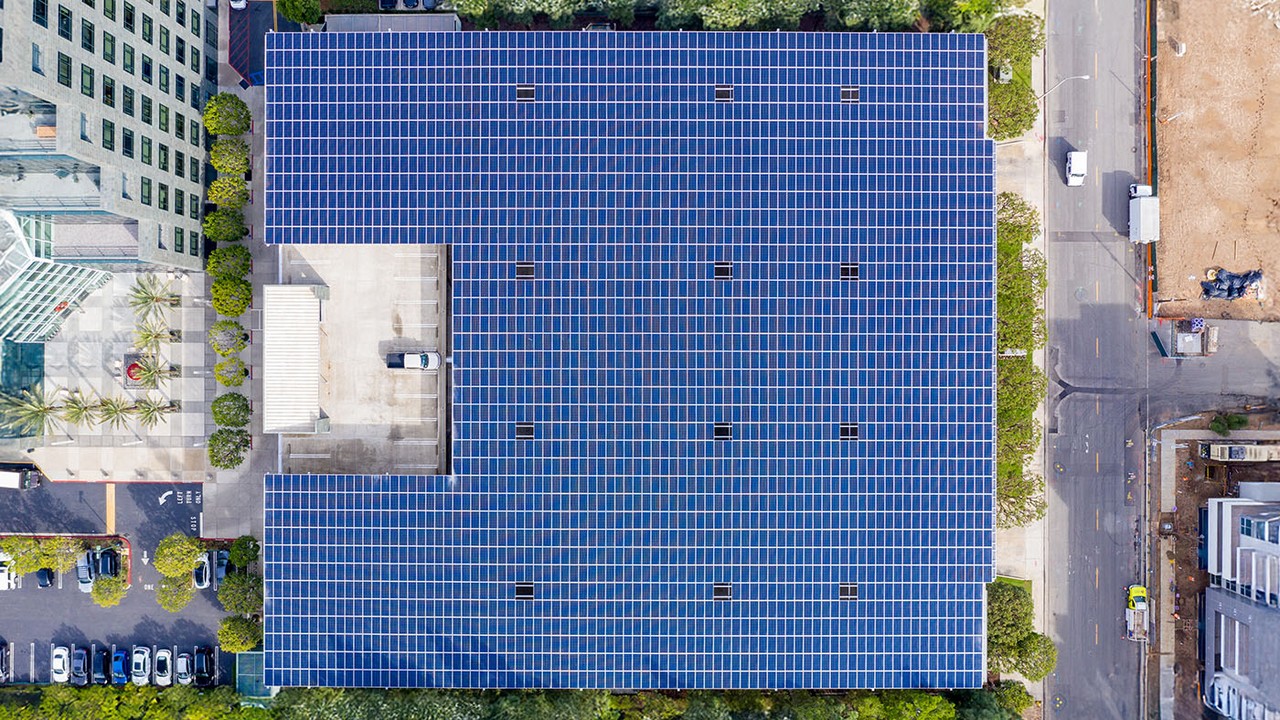
A commercial array may run across a large flat roof, several roof sections, a carport or a ground area, with hundreds of modules in many strings. A fault in one string affects only part of the system, so the inspector has to check string by string rather than looking at one total production figure. Layout matters too. Access routes, walkways and roof edges decide what can be reached safely and what needs a closer look from another visit.
More equipment, more connections
Larger systems usually have several inverters, combiner boxes, disconnects and longer cable runs. Every connection is a point where a fault can start, and there are simply more of them than on a home system. The inspection therefore spends more time on the balance of system, the wiring, combiner boxes, disconnects and protection devices that connect the modules to the inverters and the inverters to the building.
Records that have to reconcile
A commercial owner usually needs the inspection to serve more than one purpose. Production records support SREC income in Washington, DC, where certificates depend on recorded generation. Maintenance records support warranty claims. Condition records support a sale, a refinancing or an insurance question. An inspection that finds a fault but does not record it clearly, with dates and locations, leaves the owner with a problem they cannot prove.
What the inspector checks
A thorough commercial inspection covers six areas. Not every site needs the same depth in each one, but a check that looks only at the modules will miss problems that only the wiring, the inverters or the records can show.
PV modules and electroluminescence
The inspector checks the modules for visible damage, cracking, discolouration, delamination and signs of hot spots, and compares the condition of modules across the array. A module that looks different from its neighbours is a reason to look closer, not a finding to note and move past.
One diagnostic method used during inspection is electroluminescence imaging, often shortened to EL. In simple terms, a small current is passed through a module in dark conditions and a sensitive camera records the light the cells emit. Healthy cells glow evenly. Cracks, dead areas and damaged cells show up as dark lines or dark patches. EL is a diagnostic method, not a repair and not a service on its own. It helps an inspector see damage inside a module that is invisible in daylight, and it is most useful when a module is underperforming, when a warranty claim needs evidence, or when a buyer wants to know the real condition of an array before purchase.
Mounts, corrosion and roof penetrations
Mounting holds the whole system in place, so the inspector checks racking, clamps and fixings for movement, loose hardware, corrosion and damage. On a roof system this includes inspecting solar panel mounts for corrosion, especially at fixings, brackets and any place where different metals meet or where water can sit.
Roof penetrations deserve their own attention. Every point where mounting passes through the roof is a place water can enter if flashing or sealing has failed. The inspector looks for staining, damaged flashing, failed sealant and signs of water tracking, and notes whether any penetration needs a roofer to look at it. A solar inspection does not replace a roofing inspection, but it should flag a roof problem clearly enough that the owner knows to get one.
Inverters and balance of system equipment
The inspector checks each inverter for operating status, fault history, output and physical condition, and compares production between inverters on the same site. If one inverter is producing less than the others in the same conditions, the cause needs to be found, whether it sits in the inverter, in the strings feeding it or in the wiring between them.
Solar panel equipment inspection also covers combiner boxes, disconnects, cabling and protection devices. The inspector looks for loose or heated connections, damaged cable, water ingress and disconnects that do not operate as they should. A loose connection can cause intermittent faults that are hard to catch in data alone, because the system works on the day of the visit and fails on another day.
Monitoring, data and SREC records
Most commercial systems report production to a monitoring system, and that link is part of the inspection. The inspector checks whether every inverter is communicating, whether the data is arriving completely, and whether the monitoring record matches what the equipment itself reports. A gap in the data does not automatically mean the panels have stopped working. It often means the monitoring connection has failed. But while the data is missing, no remote check is possible, and if production is not recorded, it may not be counted for SREC purposes until the gap is resolved.
The inspector also checks that generation records, inverter readings and monitoring data agree with each other. For DC systems that earn Solar Renewable Energy Certificates, known as SRECs, that agreement is what keeps the records clean. An inspection that finds a data gap should date it, so the owner knows which period is affected.
Safety and shutdown
Finally, the inspector checks the safety side of the system: that protection devices are present and have not operated without a recorded reason, that labelling is in place, that access is safe, and that the system can be shut down and restarted correctly. A protection device that has operated is information, not a reset button. If it trips again after being reset, the underlying fault still needs investigation.
Any sign of heat, burning or damage near electrical equipment is not a routine inspection finding to be watched. It needs prompt on-site assessment by qualified personnel, and the system should not simply be left running while the data is reviewed.
What a good report should contain
An inspection is only as useful as its report. A good commercial inspection report should give the owner enough to act on without a second visit to understand it.
It should list what was checked, system by system and inverter by inverter, and what was found at each point, with locations that can be found again on site. It should include photographs of faults, with the string, inverter or roof section named. It should rank findings so the owner can see what is urgent, what should be fixed soon and what can be watched. It should say what could not be checked, and why, rather than staying silent about it. And it should say what the next step is for each finding, whether that is a repair, a warranty claim, a monitoring fix or a further check.
A report that only says the system looks fine, with no detail and no photographs, does not give the owner anything to use. A report that lists faults without ranking them leaves the owner guessing where to start.
When to arrange one
There is no single right interval for every site, but there are clear moments when a commercial solar inspection is worth arranging.
Arrange one when production has fallen without an obvious cause, or when one inverter or string is producing less than the others. Arrange one before a warranty claim, so the claim is supported by dated evidence rather than a description. Arrange one before buying or selling a commercial property with solar, so both sides know the condition of the asset. Arrange one after severe weather, hail or work on the roof, when damage may not be visible from the ground. And arrange one as a routine check, so small problems are found while they are still small, rather than after months of lost production.
A routine inspection is also the right time to check that monitoring, records and SREC data are in order. Finding a data gap during a routine visit is a small fix. Finding it months later, when certificates are due, is a larger problem.
How to choose an inspector
For a commercial system, the inspector should be independent of the company that installed it, or at least able to give a second view of the same equipment. An independent or third-party inspection is most useful before a warranty claim, before a sale, or when an owner and an installer disagree about whether a problem exists.
Before booking, ask what the inspection covers, in writing: which areas, which equipment, whether EL imaging is included where it is useful, and what the report will contain. Ask how findings are ranked and whether photographs are included. Ask who carries out any repair that follows, and how that is arranged, so the owner knows where inspection ends and repair begins. An offer that cannot answer these questions clearly is incomplete, and an owner should not accept it until the answers are on the record.
Final thoughts
A commercial solar system earns its value over many years, and most of that value is lost slowly, through small faults, data gaps and unrecorded problems, rather than through one dramatic failure. A regular inspection is how an owner catches that slow loss while it is still cheap to fix.
The routine is short, and it is the same every time: check the modules, the mounts and the roof, the inverters and the wiring, the monitoring and the records, and the safety of the whole system, then record what was found with enough detail to act on. That record is what supports a warranty claim, a sale, or a clean SREC account, and it is what keeps a commercial asset producing the way it was designed to.
For commercial owners in Washington, DC, a commercial solar inspection is not an extra cost on top of owning solar. It is the check that protects the income the system is supposed to earn, period after period.
SAMS, Solar Asset Management Services, Washington, DC, provides SREC brokerage, production monitoring, maintenance and repair coordination, and inspections. Website: samsmd.com | Phone: +1 240-320-6468.