
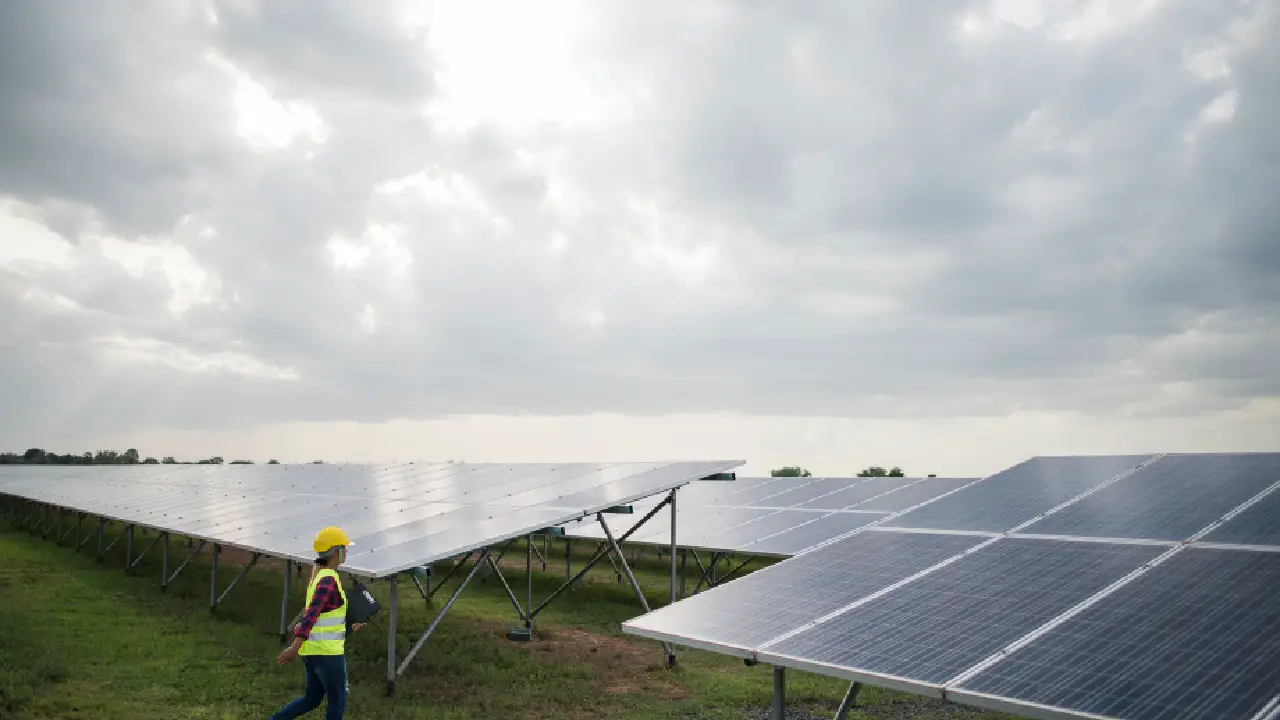
Solar Panel Degradation: How Much Power Do Panels Lose Over Time?
By Team Faseeh Lall
Solar panels are designed to operate for decades, but they do not produce exactly the same amount of power forever.
As photovoltaic modules spend years exposed to sunlight, heat, moisture, wind, temperature changes, and other outdoor conditions, their ability to convert sunlight into electricity gradually declines.
This process is known as solar panel degradation.
Degradation is normal. It does not necessarily mean a panel is defective or that the solar system needs immediate replacement.
The more important question is:
How much power loss is normal, and when does declining production indicate a problem beyond ordinary aging?
Understanding that difference can help solar owners make better decisions about monitoring, inspections, maintenance, repairs, and eventual equipment replacement.
What Is Solar Panel Degradation?
Solar panel degradation is the gradual reduction in a photovoltaic module's ability to produce electricity over time.
A new module may begin its operating life at or near its rated performance under standardized conditions.
As the module ages, environmental and material stresses can slowly affect its components.
The result is typically a small decline in maximum power output from year to year.
The U.S. Department of Energy commonly uses about 0.5% annual module degradation when evaluating photovoltaic performance, although actual degradation varies by technology, equipment quality, climate, installation conditions, and other factors.
That means degradation should be viewed as a trend rather than one universal percentage that applies to every solar panel.
How Much Power Do Solar Panels Lose Each Year?
A commonly referenced benchmark is approximately 0.5% per year for module degradation.
However, real-world data show that results vary.
The Department of Energy reported that an NREL analysis of a broad U.S. photovoltaic fleet found a median system performance loss of roughly 0.75% per year. That system-level figure can reflect more than module aging alone because complete PV systems include inverters and other equipment.
NREL's PV Lifetime Project also shows that degradation differs substantially among module technologies and manufacturers. In recent field results, several tested module groups showed median annual degradation around 0.25%–0.55%, while another technology degraded considerably faster.
The key takeaway is simple:
Solar degradation is usually gradual, but the exact rate depends on the equipment and operating environment.
What Does 0.5% Annual Degradation Mean in Practice?
Imagine a solar module starts with an effective output of 100%.
If it experienced approximately 0.5% degradation each year, its output capability would gradually decline rather than suddenly collapse.
A simplified illustration might look like:
Year 1: approximately 100%
Year 5: roughly 98%
Year 10: roughly 95%
Year 20: roughly 90%
Year 25: around the high-80% range
This is only an illustration.
Actual performance is not always perfectly linear, and individual modules may degrade faster or slower.
DOE notes that many rooftop systems still maintain at least about 80% of their initial power output after 25 years, which is why aging does not automatically mean the system should be replaced.
Why Do Solar Panels Degrade?
Solar modules operate outdoors for decades.
Over that time, several stresses can contribute to gradual material and electrical changes.
1. Temperature Cycling
Solar modules repeatedly heat during daylight and cool overnight.
Seasonal changes add even larger temperature swings.
This continuous expansion and contraction can place stress on:
Electrical connections
Solder joints
Encapsulant materials
Module interfaces
Over many years, these stresses can contribute to performance decline.
2. Moisture and Humidity
Modules are designed to withstand outdoor moisture, but prolonged exposure to humidity can contribute to material deterioration if moisture reaches vulnerable areas.
Potential effects may include corrosion or changes in module materials.
3. Ultraviolet Exposure
Solar panels spend years exposed to ultraviolet radiation.
PV materials are engineered for this environment, but long-term UV exposure can contribute to aging in encapsulants and other materials.
4. Mechanical Stress
Modules experience mechanical forces from:
Wind
Snow
Hail
Installation
Transportation
Temperature changes
Repeated or severe stress can affect cells and module materials.
5. Material Aging
Even under normal operating conditions, the materials inside photovoltaic modules can gradually change over time.
That is why some level of degradation is expected as part of long-term operation.
Is Solar Panel Degradation the Same as Solar System Underperformance?
No.
This distinction is extremely important.
Degradation refers to the gradual, expected reduction in module performance as equipment ages.
Underperformance means the system is producing less electricity than reasonably expected after accounting for conditions such as weather, age, and system design.
A system can underperform because of:
Inverter faults
Wiring problems
Heavy soiling
New shading
Communication failures
Module damage
Ground faults
Equipment downtime
Storm damage
DOE recommends comparing actual production with modeled or expected output while considering factors such as weather and module age to identify genuine underperformance.
A sudden 15% production drop, for example, should not automatically be blamed on normal annual degradation.
Gradual aging usually occurs much more slowly.
How Can You Tell Whether Power Loss Is Normal Degradation?
Start with historical data.
A well-monitored solar system can provide information such as:
Monthly energy production
Annual generation
Inverter status
System availability
Fault history
Long-term performance trends
Comparing annual production requires care because sunlight changes from year to year.
A cloudy year may produce less electricity than a sunny year even if the equipment has not degraded unusually.
Temperature, shading, downtime, and maintenance events can also affect the numbers.
This is why professional performance assessment may compare actual production with expected production adjusted for:
Solar resource
Temperature
System age
Availability
Known equipment conditions
The objective is to distinguish a normal long-term trend from an abnormal loss.
Sudden Production Loss Is Usually Not Normal Degradation
Normal solar panel degradation should generally appear gradually over time.
A sharp or sudden decrease deserves investigation.
Examples include:
Production suddenly falling after a storm
One part of the array producing much less than another
An inverter repeatedly shutting down
Generation dropping significantly from one month to the next without a weather explanation
Production not recovering after maintenance
Possible causes could include:
Inverter problems
Electrical faults
Damaged wiring
Module damage
New shading
Monitoring errors
Soiling
The correct response is usually diagnosis rather than automatically assuming the modules are old.
Do All Solar Panels Degrade at the Same Rate?
No.
NREL research demonstrates substantial variation among technologies and module designs.
Factors affecting degradation can include:
Module technology
Manufacturer
Material quality
Climate
Temperature exposure
Humidity
Installation conditions
Mounting configuration
Mechanical stress
NREL's degradation research has repeatedly emphasized that degradation rates vary because of technology, quality, climate, mounting, and measurement methods.
This is another reason a generic percentage should not be treated as a guaranteed prediction for one specific solar array.
Does the First Year Have More Degradation?
Some photovoltaic technologies may experience greater initial degradation before settling into a lower long-term annual rate.
NREL's recent PV Lifetime Project found that several tested module groups experienced much of their measured degradation during their first year of operation.
Performance warranties may therefore distinguish between:
First-year performance loss
Annual degradation in later years
Owners should check the actual module manufacturer's warranty rather than assuming every warranty uses identical degradation limits.
How Long Do Solar Panels Last?
Solar panels can remain operational for decades.
DOE currently notes that industry professionals report average operational lifespans in the range of roughly 25–35 years, although actual service life varies.
A panel reaching 25 years old does not suddenly stop generating electricity.
It may continue producing beyond that point, but usually at a lower output than when it was new.
The decision to continue operating, repair, repower, or replace an aging system should therefore consider:
Actual production
Equipment condition
Maintenance cost
Warranty status
Electricity value
System reliability
Other equipment failures
Does Degradation Mean Solar Panels Need Replacement?
Not necessarily.
A panel producing slightly less electricity than when it was installed may still be economically useful.
DOE specifically advises that, in many cases, owners are better served by keeping functioning rooftop solar equipment operating rather than replacing it simply because newer modules are available.
Replacement may deserve consideration when:
Performance has declined substantially
Physical damage is present
Repairs are no longer practical
Equipment safety is compromised
Multiple components are failing
Repowering provides a strong financial case
Age alone should not be the only factor.
Can Maintenance Stop Solar Panel Degradation?
Maintenance cannot eliminate normal material aging.
However, good operations and maintenance can help prevent avoidable performance losses from being confused with degradation.
Examples include:
Keeping monitoring operational
Addressing inverter faults
Repairing damaged wiring
Managing excessive soiling
Inspecting equipment after severe weather
Resolving shading problems
Correcting failed components
DOE notes that effective operations and maintenance can help optimize photovoltaic system performance throughout its operating life.
The goal is not to make modules permanently stay at their original output.
It is to prevent unrelated problems from causing additional production loss.
Does Solar Panel Cleaning Reverse Degradation?
No.
Cleaning can remove external contamination such as:
Dust
Pollen
Bird droppings
Soot
Debris
If soiling is blocking sunlight, cleaning may restore some lost production.
But cleaning does not reverse the physical aging of photovoltaic materials.
That is another useful distinction:
Soiling loss may be recoverable.
Age-related module degradation generally is not.
Can Solar Monitoring Detect Degradation?
Monitoring can help identify long-term trends, but degradation analysis is more complicated than simply comparing one year of production with another.
Solar production changes with weather.
A proper analysis may need to account for:
Solar irradiance
Temperature
Availability
Equipment outages
Shading
Maintenance
Seasonal conditions
DOE recommends tracking production over time and comparing actual output with expected performance when assessing system condition.
For solar asset owners, consistent historical monitoring data can become increasingly valuable as the system ages.
What Is a Performance Warranty?
Many solar modules include a performance warranty.
Unlike a product warranty that may cover specific manufacturing defects, a performance warranty generally describes the minimum level of module output expected over a defined period.
Terms vary by manufacturer.
A warranty may specify:
Maximum first-year degradation
Maximum annual degradation afterward
Minimum output after 25 or 30 years
These values should not be generalized across every module.
Always check the exact warranty for the installed equipment.
Solar Panel Degradation vs. Inverter Failure
Modules and inverters age differently.
Solar module degradation is normally gradual.
An inverter failure may create a much more abrupt performance change.
For example:
Module degradation: slow decline over multiple years.
Inverter failure: sudden partial or complete production loss.
This is why long term solar performance should be evaluated at the system level rather than looking only at panel age.
Can Degradation Affect SREC Generation?
Potentially.
Solar Renewable Energy Certificates are associated with qualifying solar electricity generation.
If physical solar output gradually declines as a system ages, the amount of electricity available to support future certificate creation may also gradually decline.
However, degradation should not be confused with avoidable production loss.
If a system is producing less electricity because an inverter has failed or another repair has been ignored, that lost generation may exceed the normal effect of module aging.
For SREC-producing systems, maintaining equipment and monitoring performance can therefore have both technical and financial importance.
When Should an Aging Solar System Be Inspected?
Consider professional evaluation when:
Production falls faster than expected
Output suddenly changes
One part of the array performs differently
Inverter faults repeatedly occur
Modules show visible physical damage
The system experiences severe weather
Monitoring suggests persistent underperformance
The system is older and has not been inspected recently
There is no universal inspection interval appropriate for every solar system.
Inspection needs should reflect equipment age, manufacturer guidance, system history, site conditions, and observed performance.
Frequently Asked Questions
How fast do solar panels degrade?
A commonly used benchmark is around 0.5% per year, but actual degradation varies by module technology, manufacturer, climate, installation, and operating conditions.
How much power do solar panels lose after 25 years?
There is no universal number. DOE notes that many rooftop systems maintain at least around 80% of their initial power output after 25 years.
Do solar panels suddenly stop working after 25 years?
No. Solar panels do not normally stop producing simply because they reach a certain age. Many continue generating electricity beyond 25 years, although output may be lower.
Can solar panel degradation be reversed?
Normal age-related degradation generally cannot be reversed. However, recoverable production losses caused by dirt, equipment faults, shading, or maintenance problems may sometimes be corrected.
Is a sudden power drop normal solar degradation?
Usually not. Normal degradation is gradual. A sudden production decline may indicate an inverter fault, wiring issue, module damage, shading change, or another system problem.
Does cleaning prevent solar panel degradation?
Cleaning can address soiling but does not stop the normal aging of photovoltaic materials.
When should old solar panels be replaced?
Replacement should depend on actual performance, equipment condition, repair economics, safety, warranties, and the value of continuing to operate the existing system not age alone.
Final Thoughts
Solar panel degradation is normal. Solar underperformance is not always normal.
Most photovoltaic modules gradually lose a small portion of their ability to produce power as they age.
A commonly used degradation benchmark is around 0.5% per year, but real-world rates vary significantly among technologies, systems, and environments.
The most important thing for a solar owner is not to focus on one percentage.
Instead, track the system over time.
Know what normal production looks like.
Maintain reliable monitoring.
Investigate sudden or unusual declines.
And separate unavoidable long term aging from performance losses that can actually be corrected.
A solar system that is monitored, inspected, and maintained properly can continue delivering useful electricity for decades even as normal degradation gradually reduces its maximum output.