
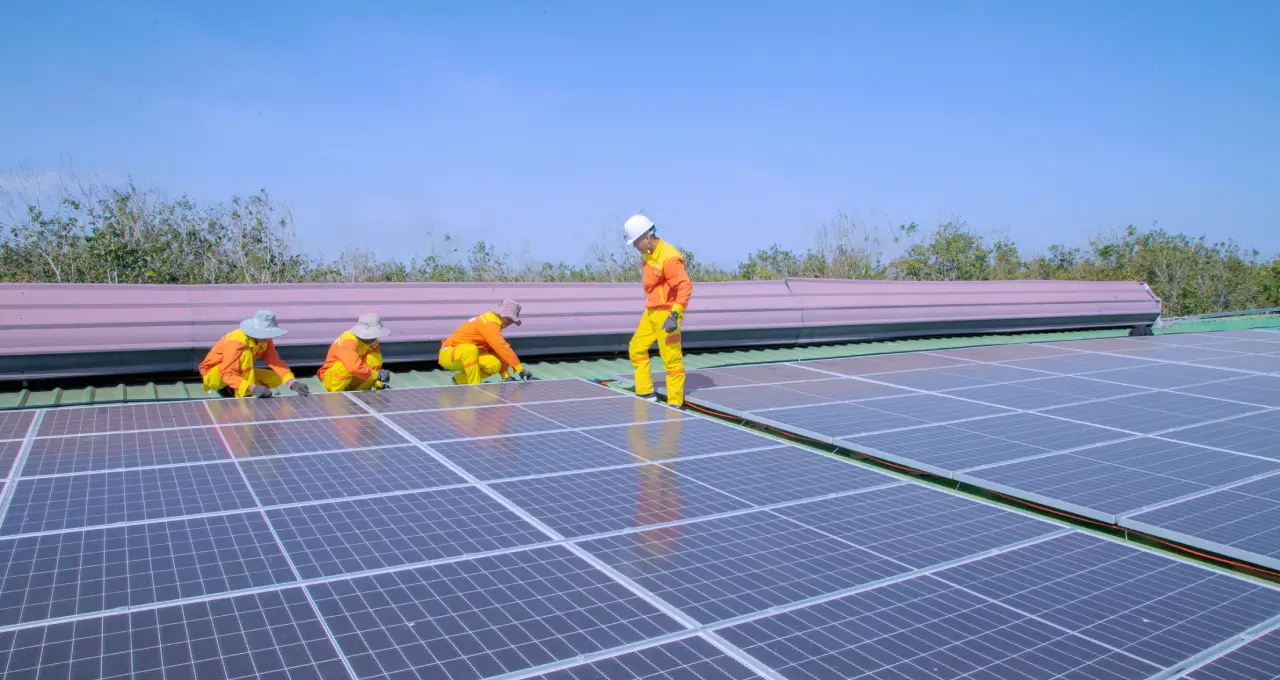
Solar Asset Management Guidelines: Best Practices for Better Performance
By Team Faseeh Lall
Installing a solar photovoltaic system is only the beginning of its operational life.
Once a system is commissioned, owners and operators need to monitor its performance, maintain equipment, manage documentation, respond to faults, control operating costs, protect warranties, and plan for long-term system needs.
That is where effective solar asset management becomes essential.
Strong solar asset management guidelines help property owners, facility managers, investors, and solar operators move from reactive maintenance to structured, performance-focused management.
The U.S. Department of Energy emphasizes that preventive operations and maintenance are important for long-term PV system safety and performance. It also recommends regular monitoring, documented O&M planning, appropriate maintenance budgets, and qualified personnel.
A well-managed solar asset is therefore not simply one that is producing electricity today. It is one that is monitored, documented, maintained, and managed with its entire operating life in mind.
What Is Solar Asset Management?
Solar asset management is the coordinated management of a photovoltaic system's technical, operational, financial, contractual, and administrative performance.
Operations and maintenance are important parts of asset management, but they are not the entire picture.
Traditional maintenance may focus on questions such as whether an inverter is operating or whether panels require cleaning.
Asset management takes a broader view.
It asks whether the system is performing as expected, whether downtime is being identified quickly, whether warranties are being preserved, whether service providers are meeting their responsibilities, whether production records are accurate, and whether the asset is continuing to deliver the value expected from it.
For larger portfolios, asset management may also involve managing multiple sites, comparing performance across systems, coordinating vendors, tracking contracts, and maintaining standardized reporting.
The Department of Energy describes the PV lifecycle as extending from procurement and installation through operation, maintenance, and eventually the end of the system's performance period.
Why Solar Asset Management Matters
Solar photovoltaic systems often have relatively low routine maintenance requirements compared with many mechanical energy systems.
That does not make them maintenance-free.
A system can continue operating while producing less electricity than expected because of inverter problems, electrical faults, shading, soiling, equipment degradation, communication failures, or other issues.
Without effective monitoring, some performance problems may continue longer than necessary.
The Department of Energy notes that regular PV O&M can support energy delivery, reduce downtime, improve safety, and contribute to longer system life.
For asset owners, the objective is therefore not simply to prevent complete failure.
It is to identify small problems before they become prolonged performance losses or expensive corrective repairs.
Establish a Clear Performance Baseline
Good solar asset management begins with knowing what normal performance should look like.
System owners should have access to original production estimates, system specifications, commissioning information, equipment data, and historical generation records.
A performance baseline gives the asset manager something meaningful to compare current production against.
For example, a lower production month does not automatically indicate a fault. Seasonal sunlight levels, weather conditions, shading, and normal system degradation can affect generation.
The important question is whether the system is performing within a reasonable range given current conditions.
This makes historical data and expected production estimates especially useful.
Over time, performance trends can reveal changes that may not be obvious from a single day's monitoring data.
Monitor Solar Performance Consistently
Monitoring should be treated as an ongoing management function rather than something that is checked only when a utility bill looks unusual.
Modern PV systems can provide information about energy production, inverter operation, alerts, communication status, and sometimes individual strings or modules.
Regular monitoring helps asset managers identify abnormalities more quickly.
The Department of Energy recommends regularly checking operational indicators such as production meters and inverter error messages and considering dedicated monitoring services where appropriate.
Monitoring should focus on meaningful exceptions.
If production suddenly drops, an inverter goes offline, communications stop reporting, or one section of a system consistently underperforms, the issue should be investigated rather than ignored.
For portfolios containing multiple solar systems, centralized monitoring can make this process considerably easier by helping asset managers compare sites and prioritize problems.
Build a Preventive Maintenance Strategy
Waiting for equipment to fail is rarely the strongest long-term management strategy.
Preventive maintenance is intended to identify developing problems and keep systems operating safely before failures cause significant downtime.
A preventive maintenance program may include scheduled inspections of modules, mounting hardware, wiring, electrical connections, inverters, disconnects, grounding systems, vegetation, drainage, and other site-specific components.
The exact maintenance schedule should reflect the equipment installed, manufacturer recommendations, site conditions, system size, climate, and contractual requirements.
DOE guidance specifically recommends creating an O&M plan instead of treating maintenance as an occasional response to problems.
A strong plan should also distinguish preventive maintenance from corrective maintenance.
Preventive work is planned.
Corrective maintenance begins after a fault, failure, or performance issue has already been identified.
Both need clear procedures, responsibilities, and budgets.
Take Inverter Performance Seriously
The inverter is one of the most important components of a photovoltaic system because it converts the direct current produced by solar modules into usable alternating current.
An inverter issue can therefore affect a significant portion of system production.
Asset managers should monitor inverter alerts, operating status, temperature warnings, communication errors, shutdowns, and recurring fault codes.
A system that repeatedly trips should not simply be restarted without investigating the underlying cause.
DOE guidance recommends electrical inspection following inverter nuisance tripping rather than repeatedly resetting the system without diagnosing the problem.
Asset managers should also maintain records of inverter warranties, firmware updates, previous repairs, and replacement history.
This information becomes increasingly important as a system ages.
Manage Soiling, Vegetation, and Site Conditions
Environmental conditions can influence system performance and maintenance needs.
Dust, bird droppings, pollen, leaves, vegetation, construction debris, and other material can affect solar arrays.
However, cleaning should not automatically be performed according to an arbitrary calendar.
The frequency should reflect actual site conditions and the economic impact of soiling.
Ground-mounted systems may also require vegetation management to prevent shading, maintain safe equipment access, and reduce site risks.
Drainage, erosion, fencing, road access, and surrounding vegetation may all become part of solar asset management depending on the installation.
NREL's PV O&M guidance notes that system design, site environment, soiling conditions, drainage, ground cover, and equipment configuration can all influence long-term O&M requirements.
Maintain Accurate Documentation
Documentation is one of the most underestimated elements of solar asset management.
A solar facility may operate for decades, during which ownership, employees, maintenance contractors, and equipment can all change.
Important technical information should not exist only in one employee's inbox or in a service provider's private system.
Asset records should be centralized and accessible to authorized parties.
The Department of Energy recommends maintaining system documentation such as drawings, specifications, site plans, equipment information, warranties, performance estimates, safety information, maintenance contracts, and operating procedures.
Good records make troubleshooting easier and help new service providers understand the system without rebuilding its history from scratch.
They also help support warranty claims and ownership transfers.
Protect Equipment Warranties
Solar systems usually contain equipment from multiple manufacturers.
Modules, inverters, monitoring devices, mounting systems, batteries, and other components may all have different warranty terms.
Asset managers should maintain a clear record of warranty periods and requirements.
Some warranties may require specific maintenance practices, documentation, inspections, or approved service procedures.
A maintenance action that does not follow manufacturer requirements can potentially complicate future warranty claims.
For that reason, warranty management should be integrated into the maintenance plan rather than handled only after equipment fails.
Create a Clear Fault-Response Process
Monitoring a problem has little value if no one knows what happens after an alert appears.
Every asset management plan should define how issues are classified, assigned, escalated, resolved, and documented.
A minor monitoring communication problem should not necessarily receive the same response as a complete inverter shutdown.
Asset managers can improve efficiency by establishing different response priorities according to production impact, safety risk, equipment importance, and contractual obligations.
The goal is not simply to generate alerts.
It is to convert useful alerts into timely action.
Service tickets should record what happened, when it happened, who handled the issue, what corrective action was taken, what parts were replaced, and whether follow-up work is required.
Track Technical and Financial Performance Together
Solar asset management should connect physical system performance with financial outcomes.
A system may be technically operational but still perform below the expectations used when the asset was purchased or financed.
Managers should therefore understand both production metrics and the financial agreements connected to the project.
Depending on the system, these may include power purchase agreements, utility arrangements, renewable energy certificates, SREC revenue, maintenance contracts, insurance policies, financing obligations, warranties, and other agreements.
Production losses can have financial consequences.
Likewise, contract deadlines or compliance failures can affect the value of an otherwise well-performing system.
Managing the technical and financial sides separately can leave important gaps.
Review Service Providers and Contracts
Third-party vendors often perform essential work on solar assets.
Those relationships should be actively managed.
Asset owners should understand what each contractor is responsible for, expected response times, reporting requirements, service exclusions, pricing, renewal dates, and performance obligations.
Service reports should also be reviewed rather than simply archived.
If the same component repeatedly requires attention or the same type of fault appears across multiple sites, that pattern may indicate a broader issue worth investigating.
For larger solar portfolios, vendor performance can itself become an important asset-management metric.
Plan for Severe Weather and Unexpected Events
Solar systems can face storms, flooding, hail, extreme heat, fire risk, and other environmental events.
Asset managers should understand local risks and establish procedures before an event happens.
The Department of Energy recommends planning for pre-storm O&M and understanding insurance coverage, claim limits, and exclusions for relevant systems.
Post-event inspection procedures are equally important.
A system may continue producing electricity after a storm while still having damaged modules, mounting components, wiring, or other equipment.
Asset owners should know when professional inspection is required instead of assuming continued production means no damage occurred.
Use Data to Prioritize Maintenance
Not every maintenance task has the same financial or operational impact.
Data-driven asset management helps teams decide which issues need immediate attention and which can be scheduled.
Suppose one problem reduces output from an entire inverter while another affects only a small portion of the array.
The first issue may deserve greater priority because of its production impact.
Historical records can also help identify repeat failures.
If similar inverters repeatedly experience the same fault or one location has recurring communication outages, asset managers can investigate the root cause rather than repeatedly treating individual incidents.
This approach can make maintenance more efficient and improve decision-making across a portfolio.
Develop a Realistic O&M Budget
Solar asset management requires financial planning.
Even systems with relatively low operating costs will eventually require inspections, cleaning, vegetation management, replacement components, inverter work, monitoring subscriptions, emergency repairs, or specialist labor.
DOE recommends developing an O&M plan and budget and regularly reviewing O&M expenditures against expectations.
Budgeting ahead can prevent minor issues from remaining unresolved simply because no funds were allocated for maintenance.
For larger assets, managers may also consider maintaining an appropriate spare-parts strategy for critical components where long procurement delays could create extended downtime.
Plan for the Full Solar Asset Lifecycle
Solar asset management should not end with routine monthly monitoring.
The system should be managed across its entire useful life.
As equipment ages, owners may need to consider component replacement, inverter replacement, system upgrades, repowering, contract changes, ownership transfers, recycling, or eventual decommissioning.
NREL's solar O&M guidance describes PV management as a lifecycle process beginning with planning and design and continuing through the end of the system's performance period.
Long-term planning prevents these decisions from becoming unexpected emergencies.
Common Solar Asset Management Mistakes
A technically sound system can still be poorly managed.
Common problems include relying entirely on automated alerts, failing to maintain accurate asset documentation, neglecting preventive maintenance, ignoring recurring faults, allowing monitoring systems to remain offline, losing warranty records, responding slowly to underperformance, and treating technical and financial management as unrelated activities.
Another mistake is assuming that because solar equipment has few moving parts, management can remain entirely passive.
Strong solar asset management is proactive rather than reactive.
A Practical Solar Asset Management Checklist
Asset managers should routinely confirm that system monitoring is active, production is being compared with expected performance, critical alerts are investigated, preventive maintenance is scheduled, warranties and contracts are documented, system records are centralized, cleaning and vegetation needs are reviewed, vendors are meeting service obligations, recurring faults are analyzed, insurance and emergency procedures are current, and long-term component replacement needs are being planned.
How Often Should Solar Asset Performance Be Reviewed?
There is no single reporting schedule appropriate for every solar system.
System size, financial importance, ownership structure, contractual requirements, and monitoring capabilities all affect the right frequency.
DOE examples for federal PV systems show that recommended performance reporting can range from biannual reporting for smaller systems to monthly reporting for systems above 3 MW.
Large commercial portfolios may therefore require much more active monitoring and reporting than a small rooftop installation.
The underlying principle is simple: review performance often enough that meaningful problems do not remain undetected for long periods.
When Professional Solar Asset Management Makes Sense
Small system owners may be comfortable handling basic monitoring and scheduling qualified contractors when necessary.
As the number, size, financial value, or complexity of solar assets increases, professional asset management can become more valuable.
A dedicated asset manager can coordinate monitoring, documentation, maintenance, contractors, contracts, reporting, compliance, and long-term planning under one structured process.
This can be particularly useful for commercial property owners, investors, organizations with multiple solar sites, and owners who acquired systems without an established internal solar management team.
Final Thoughts
Effective solar asset management is about protecting the performance and long-term value of a solar investment.
The strongest strategy combines performance monitoring, preventive maintenance, fast fault response, accurate documentation, warranty management, vendor oversight, financial tracking, environmental planning, and lifecycle management.
Solar systems may be designed to operate for many years, but achieving consistent results requires more than simply installing panels and waiting for electricity production.
Following practical solar asset management guidelines helps owners understand how their systems are performing today while preparing them for the operational, financial, and maintenance requirements that will develop over time.
A structured, data-driven approach gives owners better visibility into their assets, helps prioritize maintenance intelligently, and supports more informed decisions throughout the life of the solar system.