
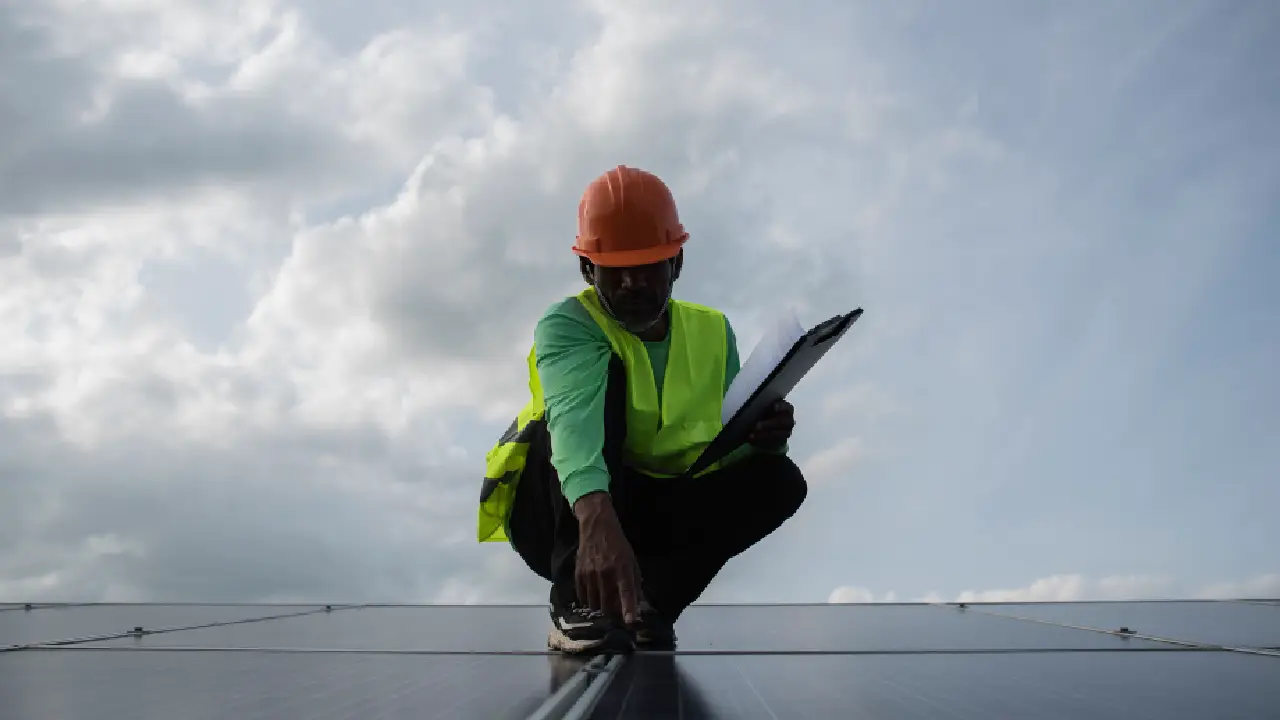
Cleaning Solar Panels on a Roof: 7 Mistakes That Can Damage Your System
By Team Faseeh Lall
Dirty solar panels can reduce the amount of sunlight reaching photovoltaic cells, but cleaning rooftop panels incorrectly can create a bigger problem than the dirt itself.
A homeowner trying to remove dust, bird droppings, pollen, or leaves may accidentally scratch the glass, damage panel seals, disturb electrical components, or create a serious fall hazard.
That is why cleaning solar panels on a roof should never be treated like washing a window or spraying down a driveway.
The U.S. Department of Energy identifies cleaning and inspection as part of photovoltaic operations and maintenance, while NREL notes that cleaning needs depend heavily on local sources of soiling and site conditions.
The goal is not to clean panels as often or aggressively as possible.
The goal is to remove meaningful contamination without damaging the equipment or putting anyone at unnecessary risk.
Here are seven mistakes solar owners should avoid.
Why Rooftop Solar Panels May Need Cleaning
Solar modules spend their entire operating lives outdoors.
Depending on the location, their surfaces may collect:
Dust
Pollen
Bird droppings
Leaves
Construction dust
Diesel soot
Ash
Other environmental contaminants
NREL identifies agricultural dust, construction activity, pollen, birds, diesel soot, and industrial sources as common causes of photovoltaic soiling.
Soiling matters because anything that blocks sunlight from reaching the cells can contribute to production losses.
But the amount of soiling—and whether cleaning is financially or operationally justified—varies significantly from one system to another.
Rain may remove some loose contamination in one location, while panels in a dry, dusty environment may require more active attention.
This is why cleaning should ideally be based on actual site conditions and performance, not a universal schedule.
Mistake 1: Climbing Onto the Roof When You Are Not Equipped to Work There
The first and most important mistake is also the one that has nothing to do with cleaning technique.
It is attempting to access a rooftop solar array without the appropriate training, equipment, and fall-protection procedures.
Solar panels can make roof access more complicated because they reduce clear walking space and introduce electrical equipment into an already elevated work area.
DOE guidance identifies both fall hazards and electrical shock hazards as important safety concerns around rooftop photovoltaic systems.
Wet surfaces make the problem even more serious.
Water used during cleaning can make roofing material more slippery, while hoses and cleaning equipment can create additional trip hazards.
Safer approach
If panels cannot be cleaned from a safe location without climbing onto the roof, professional service is usually the better option.
Energy Sage similarly recommends professional cleaning for elevated systems when the owner lacks experience working safely on roofs.
Saving the cost of a cleaning visit is not worth creating a fall or electrical hazard.
Mistake 2: Using a Pressure Washer
A pressure washer may seem like the easiest way to remove stubborn dirt.
It is also one of the cleaning methods to avoid.
High-pressure water can place unnecessary force on:
Panel surfaces
Edges
Seals
Junction areas
Connectors
Nearby wiring
DOE guidance on removing contamination from PV modules specifically warns against high-pressure hoses because they can potentially damage module glass.
Energy Sage likewise advises against pressure washing solar modules because of the risk of damaging the equipment.
Solar panels are designed to withstand outdoor weather, including rain.
But ordinary rainfall is very different from concentrated high-pressure water directed deliberately at module edges and components.
Better principle
Cleaning should use methods compatible with the module manufacturer's maintenance instructions.
More force does not automatically mean better cleaning.
Mistake 3: Scrubbing Panels With Abrasive Tools
Some forms of contamination are difficult to remove.
Bird droppings, dried pollen, hardened dust, and other deposits can tempt homeowners to scrub harder.
That can be a mistake.
Avoid using aggressive materials such as:
Metal scrapers
Steel wool
Hard brushes
Abrasive pads
Sharp tools
Rough household cleaning equipment
NREL's current photovoltaic O&M material notes that manufacturers generally recommend avoiding hard brushes and abrasive materials when cleaning PV modules.
DOE also warns that unsuitable rags, brooms, and other equipment not designed for photovoltaic cleaning can increase the risk of damaging module surfaces.
Scratching panel glass can create a permanent problem while trying to remove a temporary one.
What matters most
Always follow the cleaning instructions for the actual module manufacturer installed on your system.
If contamination cannot be removed without aggressive scrubbing, professional cleaning may be safer than increasing force.
Mistake 4: Using Harsh Household Cleaning Chemicals
Solar panels are not ordinary household windows.
Generic glass cleaners, strong detergents, solvents, bleach, and other harsh chemicals may not be appropriate for photovoltaic modules.
Depending on the product and panel design, unsuitable chemicals can leave residue or interact poorly with coatings, seals, or other module materials.
NREL notes that common manufacturer cleaning guidance generally centers on plain water or mild soap while avoiding abrasive materials.
DOE's wildfire-cleaning guidance also cautions against conventional window-cleaning products on PV modules.
Better approach
Check the manufacturer's maintenance instructions before applying any cleaning product.
Do not assume that because a chemical is safe for household glass, it is automatically appropriate for solar modules.
If professional cleaners are being used, ask what method and products they use on PV equipment.
Mistake 5: Ignoring Water Quality and Residue
Even water can leave a problem behind.
Water containing high levels of dissolved minerals can dry on the surface and leave visible deposits or spotting.
That may partly defeat the purpose of cleaning.
Professional solar-cleaning operations often use purified or deionized water because it can reduce mineral residue.
Energy Sage notes that unsuitable water and cleaning materials may leave hard-water stains or residue on panel surfaces.
This does not mean every homeowner needs specialized equipment.
It means that water quality should be considered when repeated spotting or mineral deposits occur.
Important distinction
The objective is not simply to make panels look cleaner.
It is to remove contamination without replacing it with another residue.
Mistake 6: Cleaning Without Checking Whether Cleaning Is Actually Needed
Another common mistake is assuming that cleaning should automatically occur every few weeks or months.
There is no universal cleaning schedule appropriate for every solar system.
Cleaning needs depend on:
Local rainfall
Dust levels
Pollen
Bird activity
Nearby construction
Industrial activity
Panel angle
Vegetation
System performance
NREL specifically notes that the appropriate cleaning regimen depends on local sources of dirt and that some causes of soiling may be reduced or managed at their source.
DOE has also highlighted the economic challenge of determining when cleaning is actually worthwhile because cleaning itself has labor and operating costs.
Use performance data
Before scheduling repeated cleaning, look at:
Monitoring data
Historical production
Visible panel condition
Weather
Recent rainfall
Changes in shading
Inverter status
If production is down but the modules are relatively clean, the cause may be something else.
Possible causes include:
Inverter faults
Electrical problems
Monitoring issues
New shading
Equipment damage
Cleaning an already-clean array will not fix an inverter problem.
Mistake 7: Treating Cleaning as a Substitute for Solar Maintenance
Cleaning is only one part of maintaining a photovoltaic system.
A clean panel can still belong to an underperforming system.
Other components include:
Inverters
Wiring
Connectors
Mounting equipment
Monitoring devices
Meters
Electrical protection equipment
DOE describes PV operations and maintenance as an ongoing process intended to support system performance throughout its lifecycle, including preventive maintenance and corrective action when faults occur.
So after cleaning, owners should still pay attention to:
Production data
Inverter alerts
Communication failures
Wiring conditions
Mounting problems
Unexpected shutdowns
Post-storm damage
If production remains unusually low after the panels are cleaned, further investigation may be needed.
What Is the Safest Way to Approach Rooftop Solar Cleaning?
For rooftop systems, safety should come before appearance.
A practical approach starts with determining whether cleaning is actually necessary.
Review the monitoring system and look at the modules from a safe location.
If the contamination is minor and production is normal, immediate cleaning may not be necessary.
If substantial soiling is visible or performance indicates a possible soiling problem, determine whether the panels can be serviced safely.
When rooftop access, fall protection, electrical equipment, or difficult contamination is involved, professional cleaning is generally the safer route.
The service provider should also follow the module manufacturer's cleaning requirements.
Does Rain Clean Solar Panels?
Rain can remove some loose dirt and dust.
But it does not always remove:
Bird droppings
Sticky pollen
Persistent dust
Industrial residue
Material that has hardened on the module surface
NREL researchers have noted that dust can sometimes become more difficult to remove after moisture and drying cause it to adhere more firmly to the module surface.
So rainfall can help, but it should not automatically be treated as a complete cleaning strategy for every installation.
Again, actual panel condition and system performance provide better guidance.
How Can You Tell Whether Dirty Panels Are Affecting Production?
The strongest indication is usually a combination of visible contamination and performance data.
Look for:
Heavy visible dust
Bird droppings
Leaves or debris
Persistent staining
Construction dust
Lower-than-expected production
However, a production decline alone does not prove that dirt is responsible.
Weather and seasonal changes also affect generation.
Other equipment faults can reduce output too.
A useful process is:
Notice lower production → review weather and monitoring → inspect visible panel condition → determine whether soiling is a likely cause → clean if justified → verify performance afterward
This helps prevent unnecessary cleaning.
Should You Walk on Solar Panels While Cleaning Them?
No.
Solar modules are not designed to be walking surfaces.
Even if the glass does not visibly break, unnecessary loading may damage modules or cells.
Walking on the panels also increases fall risk on an elevated array.
Professional cleaning methods should provide access to the modules without using the panel surfaces as walkways.
Can Improper Cleaning Affect a Solar Warranty?
Potentially.
Warranty terms vary by manufacturer, so there is no universal rule that applies to every solar panel.
However, damage caused by inappropriate maintenance methods may not be treated the same way as a manufacturing defect.
This is another reason to review the module manufacturer's cleaning and maintenance instructions before using unusual chemicals, tools, or cleaning methods.
Keep records of professional maintenance where appropriate, particularly when a system already has an equipment issue.
Cleaning vs. Professional Solar Panel Maintenance
These services should not be confused.
Solar Panel Cleaning
Primarily focuses on removing contamination from the module surface.
Solar Maintenance
May include a broader review of:
Monitoring data
Inverter operation
Wiring
Mounting
Electrical equipment
Communication systems
Performance history
Physical conditions
Solar Inspection
Can provide a more detailed assessment when there is suspected damage, unexplained underperformance, or another system concern.
Cleaning is therefore one tool within a larger solar maintenance strategy.
When Should You Call a Professional?
Professional assistance is particularly appropriate when:
Panels are located on a steep or elevated roof
Safe access is difficult
Heavy contamination cannot be removed easily
Bird or animal activity is present around the array
Wiring appears damaged
Modules appear cracked
Production remains low after cleaning
The inverter shows faults
A major storm has affected the property
Electrical work may be required
Cleaning technicians should not be expected to perform electrical repairs unless they are appropriately qualified for that work.
If cleaning reveals physical or electrical damage, the problem may need to be escalated to a solar technician, installer, or electrician.
Why Cleaning Matters for SREC-Producing Systems
For systems participating in Solar Renewable Energy Certificate markets, physical solar production can also have financial value.
SRECs are associated with eligible solar electricity generation.
If substantial soiling genuinely reduces electricity production, that can potentially reduce the amount of eligible generation available to support certificate creation.
But cleaning should still be economically justified.
The objective is not to clean constantly in pursuit of theoretical maximum output.
It is to maintain the solar asset sensibly and address meaningful performance losses.
This is where monitoring, cleaning, maintenance, and SREC management can work together.
A Better Rooftop Solar Cleaning Strategy
Instead of following a rigid calendar, use a simple decision process:
Monitor production → observe panel condition → identify meaningful soiling → determine safe access → clean using manufacturer-approved methods → verify performance
If the panels cannot be accessed safely, move directly to professional service.
If production does not improve after meaningful contamination is removed, investigate other causes instead of continuing to clean.
That approach protects both the solar equipment and the owner.
Frequently Asked Questions
Can I clean rooftop solar panels myself?
Some owners may be able to perform limited cleaning without unsafe roof access, but elevated rooftop work introduces fall and electrical risks. If the panels require climbing onto a roof or specialized access, professional cleaning is generally safer.
Can you pressure wash solar panels?
High-pressure washing is generally discouraged because concentrated pressure can damage module surfaces or other components. Follow the panel manufacturer's cleaning instructions.
What should you avoid using on solar panels?
Avoid abrasive brushes, metal tools, harsh chemicals, unsuitable window-cleaning products, and other methods not approved by the module manufacturer.
How often should rooftop solar panels be cleaned?
There is no universal schedule. Cleaning frequency should depend on soiling, local conditions, rainfall, panel angle, surrounding activity, and system performance.
Does rain clean rooftop solar panels?
Rain can remove some loose dust, but persistent bird droppings, pollen, soot, or hardened contamination may remain.
Can dirty solar panels reduce electricity production?
Yes. Soiling can block sunlight and reduce photovoltaic output, although the impact varies significantly by environment and severity.
What if production stays low after the panels are cleaned?
If meaningful soiling has been removed but production remains unusually low, another issue such as shading, inverter faults, electrical problems, or equipment damage may be responsible.
Final Thoughts
Cleaning rooftop solar panels is not complicated because panels require aggressive treatment.
It is complicated because the wrong approach can introduce unnecessary equipment damage and serious safety risks.
The seven mistakes to avoid are:
Unsafe rooftop access
Using a pressure washer
Scrubbing with abrasive materials
Using harsh cleaning chemicals
Ignoring water residue
Cleaning without confirming it is necessary
Treating cleaning as a substitute for complete solar maintenance
The best cleaning strategy is simple:
Clean only when conditions justify it, use methods approved for the installed equipment, prioritize rooftop safety, and verify system performance afterward.
For difficult rooftop installations, professional cleaning can help protect both the solar equipment and the person who would otherwise need to access it.
A clean system can support better production but only when the cleaning itself does not create a bigger problem.